Writer’s Gazebo: Tips to Improve Your Writing Through Empathetic Thought & Precision Editing

After several decades of observing and writing about my fellow inhabitants of Planet Earth, I can’t recall ever thinking that anyone didn’t have a story to tell. Whether it is the true account of your life’s journey, your perspectives on the world or a fictional tale, everyone has something unique that could be captured through the written word.

Writing Roadblocks

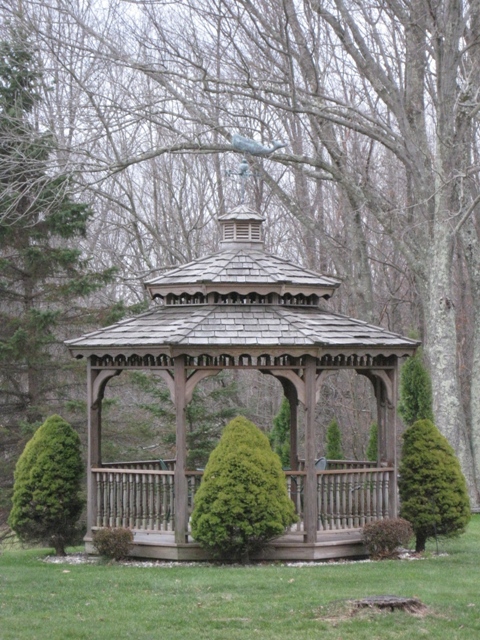
Writers' Gazebo: photo by Rich Hill.

Why then, do so few write? There are many reasons; from the profoundly sad belief that they have nothing to offer to the absurdly arrogant notion that their story is so special that someone else should be writing it, excuses abound. Two things, however, stand out as a plague impacting most would-be writers:

  1. they don’t recognize the importance of deliberate and protracted empathetic thought.
  2. they haven’t incorporated the respect for and the process of editing.

Time Away From the Computer: The Benefits of Thinking

When J.K Rowling came up with the idea for the Harry Potter series, she was on a train without pen and paper. She has often said that this was a blessing, because she spent the time thinking through the story.

Thought is a far more efficient method of testing plot lines and character attributes than writing them down. Making snap decisions about a character’s background, without walking in that character’s shoes along the paths which led to the story at hand, leaves the writer with less information about the story.

While the fingers are poised above the keyboard or curled around a pen, questions that arise about the things necessary to carry out a given plot are often brushed to the back of the mind. However, they can be explored in the imagination to their logical conclusion. This exploration is the bedrock of creative writing.

It also has its place in nonfiction. Thinking about a story can uncover underlying assumptions that need clarification and other issues which will ultimately lead to a more interesting, more informative piece. So, take a walk. The imagination is freer to wonder around when the body is as well.

Editing: the Heart of Good Writing

Shoddy editing is rampant nowadays. Beyond poor spelling and grammar, haphazardly organized, redundant and one-dimensional prose passes as well-written. In our instant-gratification-oriented culture, people expect excellent writing to instantaneously flow from their fingertips. When it doesn’t, which is typical even for the best writers, frustration paralyzes them.

Editing, unfortunately, is not merely going over a piece three or four times. The process, for most of us, is painstaking and ubiquitous. It surprises me what I will discover in a piece even after I have reread it dozens of times. Embrace this reality and join the club. Passing this job off to an editor in the early stages of writing is giving control of your story to someone who doesn’t have the benefit of your best efforts. It can also lead to expense and heartache.

Tips for Becoming a Better Editor

The type of editing which captures the best of your writing and incorporates the most of your thinking is precision editing. There is a magic that happens when pen hits paper or fingers dance on the keyboard, but it is the pre thinking and the security of knowing that you will deliberately and repeatedly pick through a piece for a standard list of issues that makes the magic possible.

The process starts with double-checking spelling and grammar. Relying on Spell Check is not sufficient and will lead to glaring errors. Here are five other things to keep in mind:

  1. Vary the structure of your sentences.
  2. Use sentence structure to build or dissipate tension.
  3. Develop a personal sense of the balance between dialog (quotes in nonfiction) and narrative.
  4. Reread to verify the sequence in which information is presented.
  5. Double-check for the accuracy of your information in fiction as well as nonfiction.

Previously Published

Earlier versions of this article by Donna W. Hill were published in 2010 by EzineArticles.com, Goarticles.com and American Chronicle. It also appeared in Slate & Style, the quarterly journal of the Writers’ Division of the National Federation of the Blind in 2013.

Posted in authors, Uncategorized, Wrighting | Tagged , , , | 1 Comment

knitting a Pie for Pi Day

The round dish cloth I am knitting not only resembles a pie, with its eight wedges and peaked edging; it also follows the revered number Pi in several ways. First, anything circular, including my cotton dishcloth, already has a connection to pi. Pi is the ratio of the circumference to the diameter of a circle.

The circumference is the outer edge, the line you draw when you draw a circle. imagine walking along the perfectly curved outer edge and measuring it as you go. The diameter is the straight line you draw to split the circle in half. Measuring it can be done easily with a ruler.

The magic of mathematics has determined that the ratio between these two numbers is a “constant.” No matter how big or small the circle is, that ratio will always be the same. And who said you can’t count on anything anymore?

Pi, an Overview

According to Pi.org, “Pi Day is celebrated on March 14th (3/14) around the world. Pi (Greek letter “π”) is the symbol used in mathematics to represent a constant — the ratio of the circumference of a circle to its diameter — which is approximately 3.14159.

Pi has been calculated to over one trillion digits beyond its decimal point. As an irrational and transcendental number, it will continue infinitely without repetition or pattern.” http://www.piday.org/

Knitter’s Pi Chart: 3.141592653

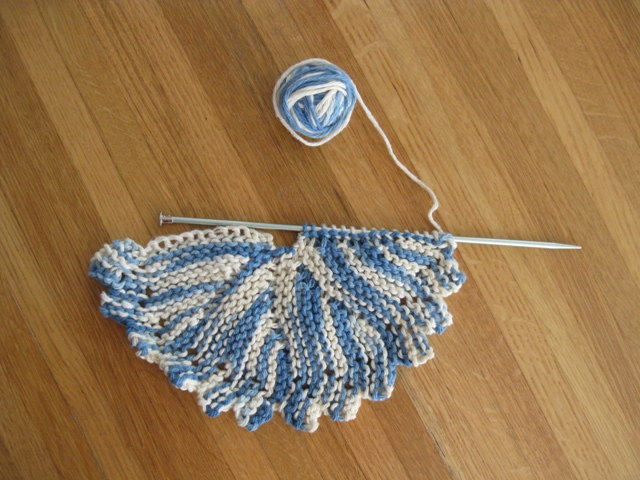
Blue Variagated Round Dishcloth w Peaks: photo by Rich Hill

I like the image of “an irrational and transcendental number,” that will continue infinitely without repetition or pattern. In fact, I might just make that my life’s goal. For today, however, I will share my musings on knitting Pi.

  • 3 = the number of peaks in each wedge of my round dishcloth.
  • 1 = the number of central points per wedge – well, duh!
  • 4 = the number of rows in each peak were the stitch-count changes.
  • 15 = the number of stitches needed to start the project. Is it OK to use two digits at once?
  • 9 = the number of wedges I had last night, when I realized that I had one more wedge than I needed. Arg!
  • 2 = the number of rows in each wedge where you actually have the original number of stitches.
  • 6 = the number of letters in “Albert.” Hey, Einstein’s birthday is March 14, so why can’t I think of him while I’m knitting?
  • 5 = the number of stitches left to cast on after you place a marker to separate the ten short-row stitches, which create the pointed wedge shape, from the edging stitches – the ones that make the peaks around the outside.
  • 3 = the number of increase rows in each peak… and no, that’s not a contradiction to 4, the number of rows in which the stitch-count changes. After all, what goes up, must come down; right?

Knitting a Round Dishcloth

Round Dishcloth on Needles Shows Curve of Short-row Knitting: photo by Rich Hill.

Now, for you knitters who want to give it a try. The pictures show the original Round Dish Cloth from Mielke’sFiber Arts: http://www.mielkesfarm.com/dishclth.htm

I made many of these before deciding to see if I could make something that was less open and therefore less fragile. yes, I use them as dishcloths, and we don’t have a dishwasher, so they get a lot of use. And, no, I am not complaining; I had a dishwasher once & I prefer doing them myself.

This pattern which is done back and forth and not in the round, relies on a technique called short-row knitting to create a curved shape. It is also used in making heels in socks, darts in sweaters etc. In short-row knitting, we have two choices – either knit less stitches every right-side row or knit more.

Mielke’s folks decided to do the former. That’s why the dishcloth is so lacey looking with a starburst of open-work flanking the eight wedges. I tried that and now exclusively use the opposite approach – knit one more stitch every right-side row. The most amazing thing is that it doesn’t change the overall shape.

Materials

Use your favorite cotton yarn (any fiber will due, if you’re going to use it as a doily), and your favorite size needles for working with that yarn. I like Peaches and Creme cotton yarn on size 7 needles. You’ll need one marker, one yarn needle and one stitch saver to use to pin the work together for finishing. BTW, “SM” means “slip marker.”

Instructions

CO 15 sts using the knit-on method. Place a marker on the needle after you’ve cast on 10 stitches to separate the short-row area from the edging. Your yarn tail will be at the center of what will soon become a circle.

  • Row 1 (rs): k3, YO, k2 (6 sts. prior to marker), SM, k1, turn.
  • Row 2 and all even-numbered rows: k.
  • Row 3: k3, YO, k3 (7 sts prior to marker), SM, k2, turn.
  • Row 5: k3, YO, k4 (8 sts prior to marker), SM, k3, turn.
  • Row 7 (ends first peak of wedge and begins second): k1, (k1, slip first st. on rh needle over second) 3 times, k2, YO, k2 (6 sts prior to marker), SM, k4, turn.
  • Row 9: k3, YO, k3 (7 sts prior to marker), SM, k5, turn.
  • Row 11: k3, YO, k4 (8 sts prior to marker), SM, k6, turn.
  • Row 13 (ends second peak of wedge and begins third): k1, (k1, slip first st. on rh needle over second) 3 times, k2, YO, k2 (6 sts prior to marker), SM, k7, turn.
  • Row 15: k3, YO, k3 (7 sts prior to marker), SM, k8, turn.
  • Row 17: k3, YO, k4 (8 sts prior to marker), SM, k9, turn.
  • Row 19 (ends third peak and ends wedge): k1, (k1, slip first st. on rh needle over second) 3 times, k4 (5 sts prior to marker), SM, k10 (all 15 sts are now on one needle.
  • Row 20: k.

Repeat these 20 rows 7 more times for a total of 8 wedges (24 peaks)

Finishing

You can use a 3-needle bind-off to join the beginning and end, but I prefer grafting (aka Kitchener stitch). What I do is to start the grafting in the 19th row of the final wedge. I cast off the 3 stitches for the final peak and replace the stitch to the left-hand needle.

Then, pick up 15 sts. along the cast on edge. Line up the two needles with the points to your right and the yarn coming out of the first stitch on the back needle. I like pinning the work together a couple of inches below the needles.

Cut the yarn giving yourself about four-times the length of the 15 stitches. Thread working yarn into yarn needle.

Prep Row

leaving the stitches on the needles, enter the yarn needle as if to purl on the first stitch on the front needle, and pull it through. Repeat for the first stitch on the back needle.

Garter grafting Chant

Front needle, knit, purl; back needle, knit, purl.

Garter Grafting Explanation

Front needle:
insert the yarn needle into the first stitch as if to knit and remove the stitch from the needle pulling the yarn through.
Insert the yarn needle as if to purl into the next stitch on the front needle; leave the stitch on the needle, but pull the yarn through. You now have 14 stitches on the front needle and 15 on the back.

Repeat for back needle so only 14 stitches remain on each needle. Then, do this whole thing over and over until only one stitch remains on each needle. Enter the front as if to knit and remove from the needle and do the same for the one on the back.

Center Finishing

Work the yarn needle through the inner edge stitches in the center of the circle and adjust the tension to your liking before tying together with the original tail yarn and working in the ends.

Posted in Knitting, Mathematics, Uncategorized | Tagged , , , , | Leave a comment

Equal Rights for Blind Americans? Author Says We’re not There Yet

As a member of various blindness, advocacy and guide dog organizations, it’s not uncommon to come across a request from a college student to take a survey on blindness, and I’m always happy to participate. Rarely, however, (in fact, never) have I run across one with the depth of thought displayed by Drexel student Nora Goldberg. If you’re blind or visually impaired, Nora would appreciate your thoughts, and she has offline options, though this form is accessible. Act soon, though, her assignment’s due the end of this week. http://goo.gl/UBHm7x

One of Nora’s questions is: “Do you feel as though you have the same rights, privileges and freedoms as people who are sighted? Please explain.” This one really pushed my buttons. No one ever asked me that. The answer is no, and the explanation took me all afternoon. So, at the risk of revealing too much about my inner psyche, I thought I’d share my response.

An Author’s Background Vis-à-vis Equal Rights

At 65, I have tried to be a useful member of society, giving of my time and talent, but despite having some accomplishments (such as 3 recordings of original music, many articles on blindness issues, a self-published novel and scores of recommendations for my school programs and writing, I do not feel valued by my community. Even people who seem to enjoy my company do not reach out to me as friends.

Blooming Amarilis with a print copy of The Heart of Applebutter Hill by Donna W. Hill, a fantasy adventure featuring some awesome flowers: photo by Rich Hill.

When I tried to get a publisher/agent for my novel The Heart of Applebutter Hill, I was told that the industry considers my representation of a blind girl as “unrealistic” and further explanations revealed that they are looking for fictional blind characters only in submissive, dependent roles. More unsettling than all of this is the fact that other blind women I know, who have more accomplishments and seem more integrated than I feel, talk about the same things.

When I ask audiences, they have no problems naming successful blind men. When asked to name a successful blind woman, however, the most frequent answer by far is Helen Keller. Ms. Keller died over 50 years ago. In what other minority can you find such a lack of female presence? And, what does that say about the public’s view of blindness?

ADA: Equality Under the Law?

The Americans with Disabilities Act (ADA), the federal law purporting to ensure our rights , has been around for a quarter century. Despite advances in technology and the achievements of some blind individuals, blind people are still the minority with the greatest gap between natural abilities (intelligence, talent and willingness to work) on one hand and the common measures of success and inclusion (employment, income, social integration) on the other.

The ADA and other disability laws are “complaint-driven” laws forcing the victims of discrimination to file, investigate and prepare cases. No policeman interviews you, writes up a report and recommends it for prosecution. A fender-bender on the highway may make you lose a few days of work, but a cop’s there in minutes administering breathalyzer tests and checking licenses. Having schools who won’t provide accessible classroom materials, being cold-shouldered by a potential boss who can’t get over the fact that you got to the interview “all by yourself” or having cabs, restaurants and motels refuse you service because you have a guide dog can damage your life for years to come.

ADA Mediation Process: Something Less Than Justice

ADA complaints often end up years later with the business who engaged in the discrimination making a “mediated” settlement in which they don’t even admit to any wrongdoing. Employees at restaurants and motels who refused a guide dog handler access to the business are usually long since gone before an ADA complaint even begins the DOJ filing process.

Abigail & her guide dog Curly Connor at Bargundoom Castle in YA novel, The Heart of Applebutter Hill by Donna W. Hill: photo by Rich Hill.

In 2012, after 42 years of using a guide dog and struggling with access issues, I finally filed a complaint against a motel for throwing us out of a room we had already occupied, because they thought the law gave them the authority to confine us to the “pets only” rooms. The fact that many people don’t understand that this is discrimination and don’t even ask why it’s not acceptable, points to the failure of the “do-it-yourself mandate” the ADA has given us. The mediated settlement doesn’t give me the right to even tell you what motel it was.

Access to Our Digital World Denied to Blind Americans

The other side of this is digital accessibility. The technology for it has been around for years, is a matter of 1s and 0s and works when designers choose to use it. Digital accessibility is to blind people what wheelchair ramps, elevators and accessible bathrooms are to people with physical disabilities. The difference is that there is a review process for brick and mortar structures which ensures that a certain amount of physical access be built in right on the drawing board.

For digital access to websites, software, controls on household and office equipment, there is no such process. “Education” and the good will of the public were supposed to bring digital access to blind people, but the problem is getting worse, not better.

The November, 2011 issue of the First Monday Journal (University of Illinois, Chicago) features an academic study explaining the issues and recommending solutions.

“Retrofitting accessibility: The legal inequality of after-the-fact online access for persons with disabilities in the United States” by Brian Wentz, Paul T. Jaeger, and Jonathan Lazar http://www.uic.edu/htbin/cgiwrap/bin/ojs/index.php/fm/article/view/3666/3077

It concludes that fully 80% of the internet is inaccessible, and it warns that disability laws are creating a “separate but unequal” online environment and a “permanent underclass.”

Snapshot of Accessibility Issues Faced by Blind Author

I am forever writing to websites about access issues that make it impossible for me to independently pursue my career and personal goals. Of the 3 most highly rated security programs (Kaspersky, Bitdefender & Norton), only Norton has any measure of accessibility. The digital webcam which my husband bought so I could do video conferences and interviews has a series of onscreen buttons to turn it on and off, etc. None is accessible. Social media sites like Linked In, Facebook, Twitter and Google+, all of which I use to promote my book, have access issues that make them either more difficult to use or which prevent people like myself who use screen readers from taking advantage of some of their functions

. My fellow indie authors at Smashwords, which distributes eBook versions of my novel The Heart of Applebutter Hill, received a free year’s subscription to the online library Scribd, which carries our books. They can read one another’s work, network and advance their writing careers for free for one year. I can’t participate, because when Scribd set up their platform, they didn’t bother using the methods which would have made it accessible. Our US Congressman has an inaccessible online contact form. I could go on and on.

There is a “separate but equal” aspect to the laws applying to people who are blind. This is a “remedy” which as we know was declared unconstitutional in racial discrimination by the Supreme Court decades ago, but it is apparently just fine for people with disabilities.

Are Equal Rights Possible When People are Considered “Fundamentally Different?

Why is all of this true? I suspect the answer lies hidden in an old survey. In the early ’90s, the Louis Harris organization conducted a survey for the National Organization on Disability (NOD) to determine how Americans viewed people with disabilities. I found it in a NOD pamphlet called That All May Worship and referenced it in Unopened Gifts: Tales Out of School my nonfiction booklet for communities of faith seeking to be more welcoming to people with disabilities. The survey summary states, “The public views disabled people as fundamentally different than the rest of the population, feeling admiration and pity most often. Embarrassment, apathy and fear are also common.”

“Fundamentally different.” I don’t think that’s changed much. Too many people – and they can be teachers, potential employers, medical professionals, neighbors and family members – expect that blindness must be an insurmountable barrier to success, independence and happiness. They see us as broken people to be admired for merely existing and as needing them to assume the role of care-giver or decision-maker. They do not see us as needing them to simply expect us to be equal contributors. Unless and until this changes, equality will remain just out of reach for blind Americans.

Purchase The Heart of Applebutter Hill & Help Blind Students

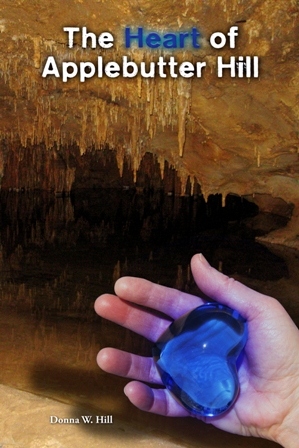
The Heart of Applebutter Hill book cover shows cave scene: stalactites reflected in an underground lake, while a hand holds the Heartstone of Arden-Goth, a blue, heart-shaped sapphire

Print

Amazon: http://www.amazon.com/books/dp/1483948226
CreateSpace eStore: https://www.createspace.com/4000964

E-book Versions

Kindle: http://www.amazon.com/dp/B00CNG6DDM
Nook Book URL: http://www.barnesandnoble.com/w/the-heart-of-applebutter-hill-donna-w-hill/1115426305?ean=2940016415000&itm=1&usri=2940016415000
Apple iTunes: https://itunes.apple.com/us/book/the-heart-of-applebutter-hill/id651693834?mt=11
Smashwords (7e-book versions including .pdf, .mobi (Kindle) & .epub (Nook, Apple, Sony, Blio, Kobo, etc.): http://www.smashwords.com/books/view/313071?ref=DonnaWHill

Outside the US

Amazon Canada (print & Kindle): http://www.amazon.ca/The-Heart-Applebutter-Hill-ebook/dp/B00CNG6DDM
Amazon UK (print& Kindle) http://www.amazon.co.uk/The-Heart-Applebutter-Hill-Donna-ebook/dp/B00CNG6DDM/ref=dp_kinw_strp_1

Accessible versions for readers with print disabilities

Bookshare: http://www.bookshare.org/browse/book/639304

A Request from Donna

After you’ve read The Heart of Applebutter Hill, please rate it and leave a review on the site where you purchased the book. Thank you for your interest and support.

Posted in Accessibility, authors, Blindness, Disability, Guide dogs, novel, Service Dogs, Smashwords, Uncategorized, Visually Impaired, young adult | Tagged , , , , , , , , , , , , | 7 Comments

The Changing Behavior Network: Teaching Diversity Through Fiction, Freebies & More 

Win an autographed copy of The Heart of Applebutter Hill; download a free MP3 of “The Rules of the Game;” take a quiz and listen to the best interview I’ve ever done. I never thought I’d say that about just one link, but that’s what’s happening at The Changing Behavior Network. Psychologist Dr. James Sutton helped me provide this multi-dimensional resource to teach kids and adults about the true capabilities of blind people and our issues.

Blooming Amarilis with a print copy of The Heart of Applebutter Hill by Donna W. Hill, a fantasy adventure featuring some awesome flowers: photo by Rich Hill.

A head’s Up … If you’re interested in the free autographed print copy of my educator-recommended novel The Heart of Applebutter Hill, sign up now; that particular offer ends in a couple of days. http://www.thechangingbehaviornetwork.com/2015/02/22/understanding-the-contributions-and-challenges-of-blind-people-guest-donna-w-hill/ 

Dr. James Sutton: Teacher, Psychologist, Author & Radio Pro

Dr. James Sutton, The Changing Behavior Network: photo courtesy of James Sutton.

Raising happy, healthy and successful children in our troubled world isn’t easy. Fortunately, for parents, educators and counsellors, The Changing Behavior Network provides a wealth of information, inspiration and resources. It’s a “radio-style podcast & blog, supporting emotional and behavioral well-being in young people.”

It’s founder, Dr. James Sutton, has a background that has enabled him to excel at the task., He worked his way through college as an announcer for a San Antonio CBS radio affiliate, conducting studio interviews with actors, political folks and special guests coming to the city. An experienced classroom teacher, Dr. Sutton is a child and adolescent psychologist.

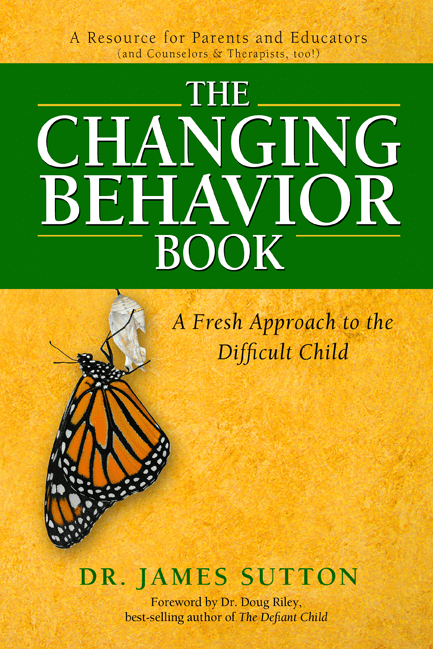
An author whose passion is young people, he speaks and writes extensively on the emotional and behavioral issues that affect today’s children and adolescents. His books include the award winning, If My Kid’s So Nice, Why’s He Driving ME Crazy?, and the best-seller, 101 Ways to Make Your Classroom Special. The Changing Behavior Book: A Fresh Approach to the Difficult Child (Friendly Oaks Publications), was released in January of 2012. For more information, visit: http://www.thechangingbehaviorbook.com

The Changing Behavior Network features interviews with guest experts and authors. There are also articles and guest posts from experts and others on topics of special interest to parents, grandparents, foster parents, teachers, counselors and other child-service professionals. In addition, the site has Special Reports, book giveaways and “Freebies.”

The Heart of Applebutter Hill on The Changing Behavior Network

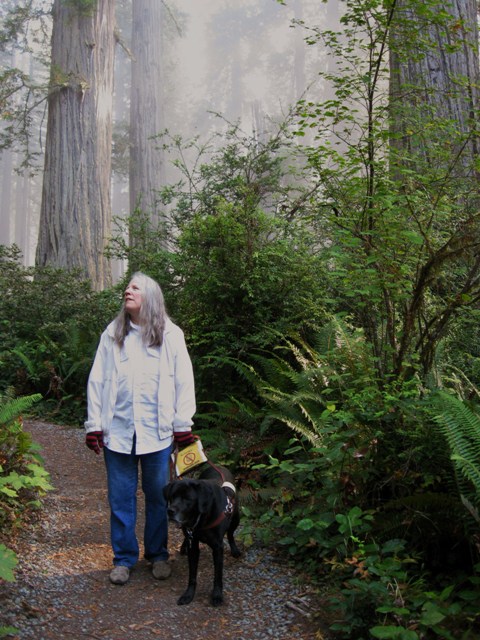
Donna W. Hill, author of the educator-recommended novel The Heart of Applebutter Hill, & her guide dog Hunter walk along path in California Redwoods. There's a glowing mist: Photo by Rich Hill.

Several months ago, I wrote to Dr. Sutton about my efforts to change what being blind means to the general public. I’ve been at this for decades in one way or another – working as a singer-songwriter, presenting school assemblies, writing for online magazines and other publications and volunteering as a publicist for various organizations within the National Federation of the Blind (NFB). My latest project, The Heart of Applebutter Hill, is taking the issue to kids through fiction.

The idea encompasses several points. First, there is a real problem in society because of the beliefs about blindness held by the general public. The low expectations, fear and resentment are damaging lives and they are often self-destructive. With diabetic-related blindness among working age adults projected to triple by 2050, changing these beliefs to be more in line with reality is essential to society’s overall health. Blindness does not have to result in an unproductive, dependent and unhappy existence

Childhood is the best place to learn inclusion and diversity, the best place to instill values of expecting the best from one another. Since most people who are blind were born sighted, negative values and prejudices learned in childhood and adolescence play a huge role.

For those who remain sighted, these prejudices inhibit their ability to recognize the value of their visually impaired neighbors, co-workers, clients, customers and even relatives or friends. For those destined to lose their own vision, these negative beliefs will prove to be the greatest obstacles to thriving without sight.

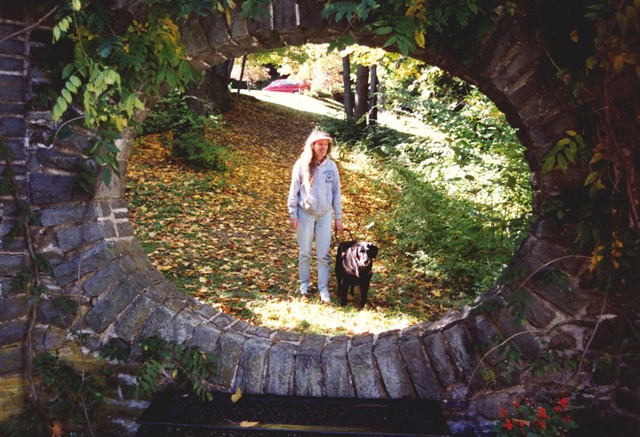
Abigail & Curly Connor stand in oval opening in stone wall at Bar Gundoom Castle in The Heart of Applebutter Hill: photo by Rich Hill.

So, how to get to the next generation? They need an encounter with a blind person to create a bond of familiarity and acceptance, an understanding that being nonvisual in no way diminishes a person’s basic humanity. Since most kids have no personal contact with blind folks, fiction, which has a long history of bridging the gaps that separate us, seems like the next best thing. Fiction is a safe place to confront social issues and develop new ideas.

Working with Dr. Sutton

Dr. Sutton agreed and invited me to be a guest on his radio show. Working with him over the past month to prepare for the show has been a truly rewarding experience. No one puts more into their interviews than Jim Sutton. It was clear from the start that he had every intention of being on top of the issues. This wasn’t going to be one of those “So, tell me a little about yourself” shows.

He wanted a copy of the book to read and then to use as a giveaway. At some point, he asked me if I had anything for his “Freebies” section, a quiz or fact sheet for instance. I didn’t. I had to ask myself, why not? Just the question motivated me to drop everything and come up with a combination quiz and fact sheet, which is now available free on his site.

Free MP3: The Rules of the Game

Then, there was the music angle. Dr. Sutton, A Vietnam vet, is a guitarist in his own right. He has an interest in several blind musicians – “I Love You Because” singer-songwriter Leon Payne (1917-1969), flat-picker extraordinaire Doc Watson (1923-2012) and the Texas-based country/folk duo Bill and Bonnie Hearne. We had a special connection with Doc Watson. One of Jim’s favorite books is Blind But Now I See: The Biography of Music Legend Doc Watson (2012) by Kent Gustavson: http://www.amazon.com/Blind-But-Now-See-Biography/dp/193775300X

After hearing that I had interviewed Doc in the ’70s for the Radio Information Center for the Blind in Philadelphia, Kent interviewed me for his book. Kent and Jim are also members of the same speaker’s bureau.

Knowing of my background as a singer-songwriter, Jim asked if I had ever written a song about advocacy. The song which came to mind was “The Rules of the Game” from my third recording The Last Straw. It features the superb harmonica of Wayne Johnston, who has had a lifetime endorsement deal with Hohner Harmonicas for decades. Wayne now lives in St. Augustine, Florida, but I worked with him and the Johnston Brothers on all three of my recordings, when we all lived in the Philadelphia area.

The lyrics to the chorus of “The Rules of the Game” are:

“You’ll never find a fighter who hasn’t been hit,
Never find the answer, if you let yourself quit,
You’ll never find a free man who didn’t break out of some kind of chain,
You’re never gonna win till you jump on in and learn the rules of the game.”

You can download it for free, sign up for the book giveaway and listen to the show at: http://www.thechangingbehaviornetwork.com/2015/02/22/understanding-the-contributions-and-challenges-of-blind-people-guest-donna-w-hill/

Fair warning, when you hear what he did with my little song, you’ll want to check out Wayne Johnston’s latest release Lucky O and Runaway Train at: http://www.waynejohnstonmusic.com/

Posted in authors, Blindness, diabetes, Education, novel, songwriting, Uncategorized, Visually Impaired, Wrighting, young adult | Tagged , , , , , , , , , , , , | Leave a comment

Authors, Advocates & the Press: Humiliation, Angst & Recovery

Hurray! I can finally scratch “getting humiliated by a national law journal” off of my bucket list. Oh, wait, it wasn’t on there to begin with. Nonetheless, it happened. I hope sharing the experience will enlighten my fellow authors and advocates about dealing with the press. In short, the “journalist” opened with a partial truth, framing both me and an issue very near and dear to my heart as narcissistic. Comments on the site underscore the effectiveness of this approach.

Smashwords, Scribd & the ABA Journal

The national law journal in question is the ABA Journal, the official publication of the American Bar Association. No, I’m not a lawyer, and I’m not an individual plaintiff in any law suits. How then, you may wonder, did a blind author of a young adult fantasy novel get involved with the Bar?
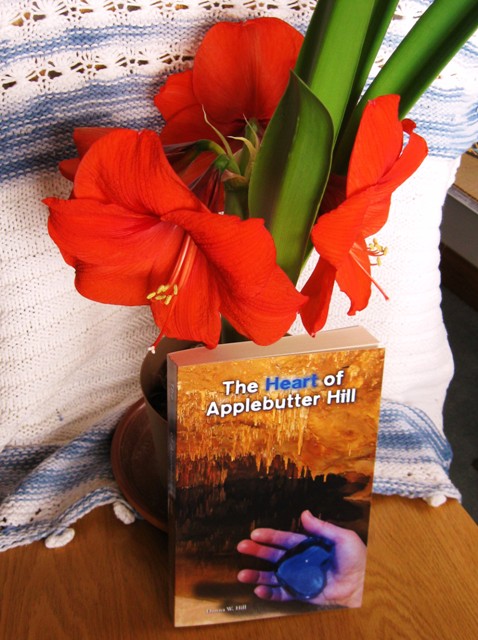
Blooming Amaryllis with a print copy of The Heart of Applebutter Hill by Donna W. Hill, a fantasy adventure featuring some awesome flowers: photo by Rich Hill.

It all stemmed from my decision to publish The Heart of Applebutter Hill on Smashwords, the eBook aggregator that distributes books in a myriad of electronic formats to a growing list of venues including Nook, Apple, Sony and Baker & Taylor Blio. I was so proud when my book was accepted for Smashwords’ Expanded Distribution program. I had properly formatted my book to “Meatgrinder” specifications without sight and using a screen reader. It was a mind-numbing learning process and a testament to the fact that accessibility can and does work.

A Word on Accessibility

The inability to interact with our growing digital world is the major access issue facing people who have print disabilities such as blindness, low vision and physical disabilities which prevent them from using a mouse. The universe of 1s and 0s holds out great hope for leveling the playing field, so that people like myself with print disabilities can compete with our able-bodied and sighted peers.

Screen readers (aka text-to-speech programs), which convert text to synthetic speech, refreshable Braille, which converts text to Braille, screen magnification and voice activation programs enable people with print disabilities to independently use computers, create, format, edit documents, send and receive emails and surf the web.

The stumbling block, which is having devastating effects on blind students, job applicants, employees, parents and customers, results from a significant number of software programs, devices and websites that do not conform to the standards necessary to enable adaptive technology to interact with them. There are regulations governing such things and many resources for web designers who are not sure about how to make their sites accessible. The technology is here, so why isn’t it being used?

Digital Accessibility: a Second-Rate Remedy

Unlike building codes for brick and mortar buildings which require elevators, wheelchair ramps and accessible restrooms in order to be physically accessible, however, there is no review process for digital accessibility. The laws governing digital access are complaint-driven. When a person with a disability encounters discrimination or access issues, they must file a complaint.

This ensures that, when public awareness campaigns are unsuccessful in getting the attention of software and website developers, accessibility ends up being a process of retrofitting, making it more costly for the business and creating monumental delays in the lives of people who require adaptive technology. It also creates adversarial relationships between students and educators, between employees and bosses and between an already marginalized minority and the general public.

The November, 2011 issue of the First Monday Journal (University of Illinois, Chicago) features an academic study explaining the issues and recommending solutions.

“Retrofitting accessibility: The legal inequality of after-the-fact online access for persons with disabilities in the United States” by Brian Wentz, Paul T. Jaeger, and Jonathan Lazar: http://www.uic.edu/htbin/cgiwrap/bin/ojs/index.php/fm/article/view/3666/3077

It warns that disability laws are creating a “separate but unequal” online environment and a “permanent underclass.”

Dashed Hopes & Lost Opportunities for Blind Authors

The problem started when Smashwords announced that they had reached a distribution agreement with a new online subscription library called Scribd. My book, along with those of other Smashwords authors would be part of the Scribd library as of April 2014, and all of us would get a free one-year membership to Scribd.

What a great thing! Authors could read each other’s work for free, network, trade book reviews and hopefully get a leg up in a business that demands an almost 24-7 commitment to marketing. Furthermore, Scribd boasts 40 million titles – Bookshare, the largest provider of accessible books for people with print disabilities just passed the 300,000 mark,. I couldn’t wait.

When I clicked to accept my complimentary membership in Scribd, however, I soon learned that the platform is totally inaccessible. I wrote and got the typical assurances that the company cared about blind authors and readers. Nothing was ever done – unless closing my customer service inquiry without resolving it counts.

National Federation of the Blind Sues Scribd Online Library

National Federation of the Blind Press Release Announcing Legal Action Against Scribd Online Library

I moved on. Then, in July, I received a press release from the National Federation of the Blind (NFB) announcing that they had filed a complaint against Scribd on behalf of a blind mother under Title 3 of the Americans with Disabilities Act (ADA). I wrote to Disability Rights Advocates (Berkeley, California), one of the law firms handling the case.

I wanted them to know that there were blind authors out there who had been locked out of a benefit available to other authors because of the site’s inaccessibility. I explained that this impeded our ability to pursue our careers and put us in a one-down position vis-à-vis our sighted peers.

I learned that, due to differences in how certain Superior Courts interpret the ADA, I had effectively forfeited my ability to participate as an individual plaintiff in the matter by accepting Scribd’s terms of use, which I had to do before I could determine whether the site was accessible. Nonetheless, I am a member of the NFB, which is an organizational plaintiff. The law firm was interested in my information and I provided them with materials documenting my experience.

Fantasy Author’s 1st National Photo Shoot is for the ABA Journal
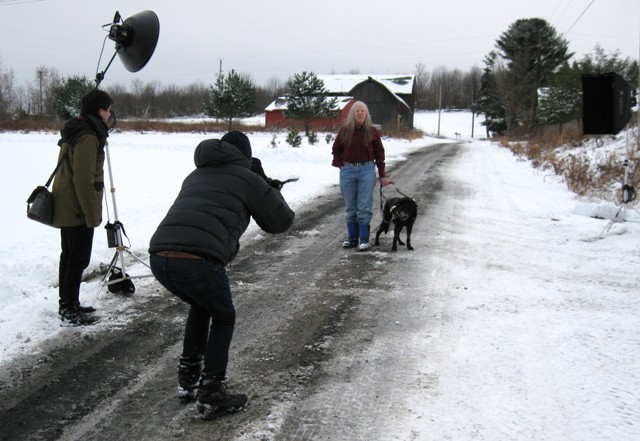
ABA Journal Photo Shoot: (l-r) asst. photographer John Kuntz, photographer Jeff Wojtaszek, Donna W. Hill & her guide dog Hunter: photo by Rich Hill.

In the fall, Disability Rights Advocates asked me if I would talk to Wendy N. Davis, a writer for the ABA Journal, who was working on an article on web accessibility and the Scribd case. I was interviewed by her via phone for well over an hour.

In December, just when I had forgotten the whole thing, I received an email from Jeff Wojtaszek, a Philadelphia-area commercial portrait photographer, about setting up a photo shoot for the ABA Journal. My first photo shoot for a national publication! I was over the moon.
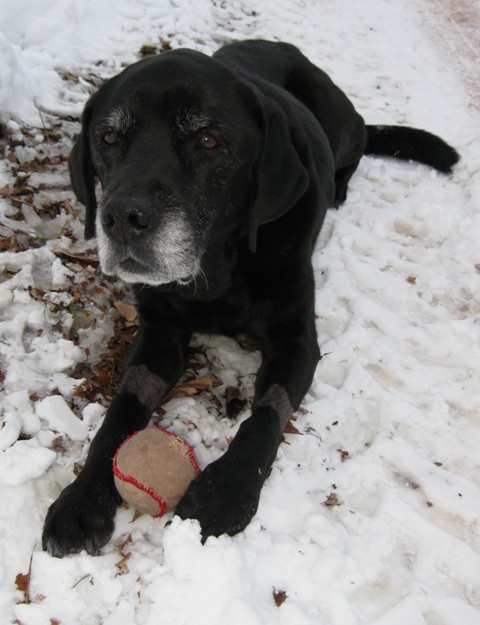
Hunter, Donna's black Lab guide dog stands in the snow, watching the camera crew with a ball in his mouth: photo by Rich Hill.

On a cold, snowy day, my husband followed the camera crew and me around our rural Pennsylvania property with his own camera. The pictures he took were my basis for a local press release which led to articles in the Wyoming County Press Examiner, the Wyalusing Rocket Courier and one on Endless Mountains Life Styles – “Meshoppen Area Woman Speaks on Behalf of Writers With Vision Impairments” by Rick Hiduk: http://www.endlessmtnlifestyles.com/?p=2969 

Then, the ABA Journal article, “People with disabilities want the Internet to be more accessible” was published: http://www.abajournal.com/magazine/article/people_with_disabilities_want_the_internet_to_be_more_accessible

ABA Journal Trivializes Blind Author’s Problems with Scribd

Imagine my horror when I realized Davis had portrayed my concerns with Scribd’s inaccessibility as merely a problem of not being able to read my own book there. Who cares if I can read my own book on the internet? I wrote the book. I have other options for reading it.

In addition to failing to mention my own lost opportunity for professional networking and advancement, Ms. Davis neglected to clarify that I am not the individual plaintiff in the legal action. That would be Heidi Viens, a blind parent from Colchester, Vermont. Based on Davis’s article, the NFB looks like they file ADA complaints based on the most trivial of problems.

Authors & the Press

I’ve dealt with the press for over 40 years. I did my own PR when pursuing my career as a singer-songwriter, and I do my own PR now as a novelist. I wrote for online magazines as a journalist for over five years covering a variety of issues including Braille literacy, web accessibility, nature, folk music and chocolate. As a volunteer publicist for the NFB, I’ve placed articles in publications across the country about exceptional blind people and the issues they face.

I’m well-aware that reporters don’t always get every fact exactly right, and interpretations vary greatly. But, even when the Philadelphia Inquirer interpreted my invitation to perform for a Presidential committee as an invitation to the White House itself, I never criticized them. My habit is to thank the media, a habit that I have just broken in honor of Ms. Davis’s shoddy reporting.

In fairness, she is a reasonably good writer and did assemble a decent selection of sources and perspectives on the issue. But, she led with me, and allowed either her own opinions or poor note-taking and recollection skills to couch an issue vital – especially to younger blind people – in terms of mediocrity and selfishness.

Coming to Terms

Whether I can forgive this is not the issue. I simply can’t remain silent about it. After reading the comments – some of which were very negative – I wrote my own comment clarifying some of the misleading and missing information in the article. I was so furious that I ended up having to write a second comment to clarify a couple of things I had said. The initial feeling of humiliation, anger and frustration was nothing short of toxic.
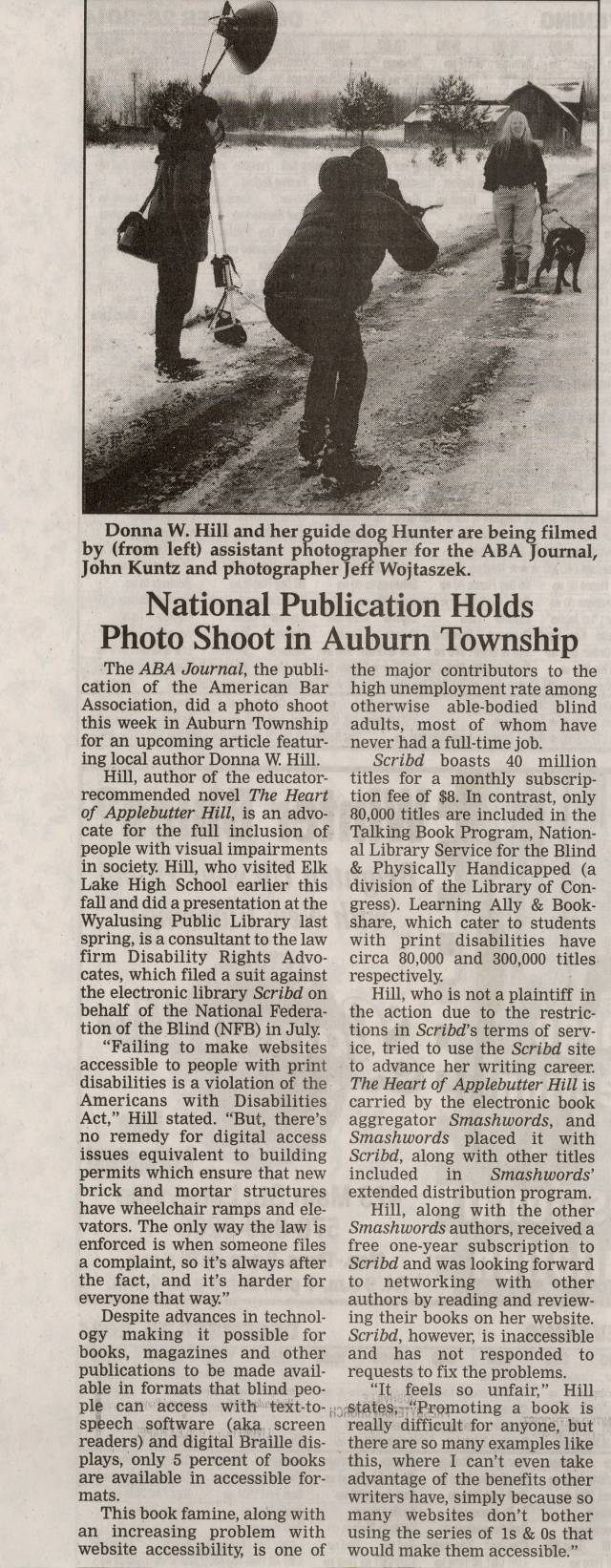
Rocket Courier (Wyalusing, PA) article, National Publication Holds Photo Shoot in Auburn Township, re ABA Journal article  about accessibility law suit against Scribd filed by National Federation of the Blind: contains photo by Rich Hill.

On the bright side (a perspective which took a full week to even surface), I was, after all, successful in getting the mainstream press in my local area to cover the issue of digital access. My belief is that the battle must be engaged there, where the public can learn about and grapple with the reality.
Also, a wise friend reminded me that anonymous comments on the internet have a reputation for vitriol. More importantly, Ms. Davis, for all of her flaws, did not succumb to the common habit of portraying blind people as amazing bastions of inspiration.

Dealing with the press and the public is not for the squeamish. Negative press is inevitable, and – for most people – hurt feelings are as well. My only advice is to do what you know to be right and plough through the unpleasantness as best you can. It will pass. The truth, as they say, “will out.”

Posted in Accessibility, ADA, authors, Blindness, marketing, PR, Print Disabilities, Self-Publishing, Smashwords, Uncategorized, Visually Impaired, Wrighting, young adult | Tagged , , , , , , , , , , , , | 1 Comment

Quiz & Fact Sheet on Blindness

After inviting me to be on his radio show on the Changing Behavior Network, psychologist Dr. James Sutton asked me if I had a quiz or fact sheet about blindness that he could make available through: http://www.thechangingbehaviornetwork.com/
I didn’t, so I created one.

Blooming Amarilis with a print copy of The Heart of Applebutter Hill by Donna W. Hill, a fantasy adventure featuring some awesome flowers: photo by Rich Hill.

What Do You Know About Blind Americans, their skills and Challenges ?

Donna W. Hill, author of the educator-recommended novel The Heart of Applebutter Hill, & her guide dog Hunter walk along path in California Redwoods. There's a glowing mist: Photo by Rich Hill.

Click or Enter to open or save this .doc and take the quiz. It’s short; just 10 True or False questions and 8 Multiple Choice. The answers are included, and there is a “More Information & References” section below. Share it with educators, librarians and others who are in a position to make a difference by instilling more positive and realistic beliefs about blindness in the next generation. If the link doesn’t work in your browser, use the private contact form below to request that it be sent to you via email.

Quiz & Fact Sheet on Blindness

Options for Sharing Your Comments Publically & Privately

How did you do? Were there things that surprised you? I’d love to hear your reactions.

  1. Use the “So, What Do You Think?” form below to post public comments.
  2. Screen reader users may prefer submitting public comments via the “Accessible Comment Form for Screen Reader Users” link above to have your thoughts posted on your behalf.
  3. For thoughts or comments you’d like to share with me privately or to have the quiz sent as an email attachment, use this Contact Form.

Private Contact Form

Go back

Your message has been sent

Warning
Warning
Warning
Warning

Warning.

Thanks for participating, and all the best!

Posted in Accessibility, ADA, authors, Blindness, Braille, diabetes, Disability, Education, Guide dogs, Literacy, Print Disabilities, Service Dogs, Uncategorized, Visually Impaired, young adult | Tagged , , , , , , , , | 1 Comment

Police Protection for Elderly Rural Pennsylvanians with Disabilities: an Alarming Story

In late December, an elderly, rural Pennsylvania couple, with medical and disability issues, were awakened at 2:00am by the sounds of thumping and clanging on their back porch. From the peep hole in the door, the husband spotted a large man stomping around, violently banging on their dinner bell and yelling incoherently into the night. 911 was called. The police never showed and didn’t return their call the next day. The couple has learned a chilling lesson about police protection in rural Pennsylvania.

The Realities of Rural Police Protection

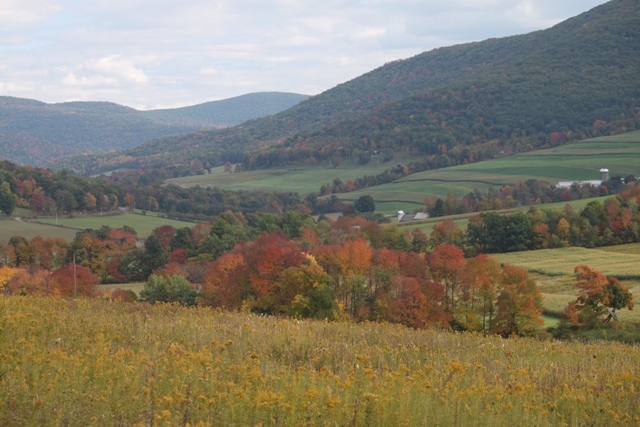
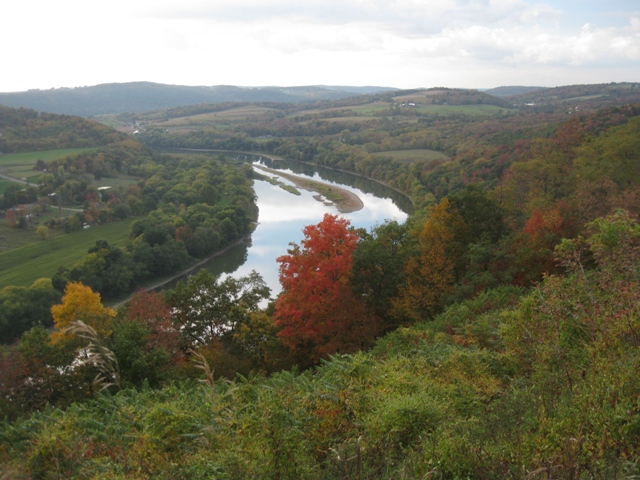
Rural Pennsylvania scenery distracts us from the truth about police protection for elderly, disabled Pennsylvanians: photo by Rich Hill

“This was not how I had envisioned celebrating the holidays,” said Mr. Brown, who – along with his wife – is a cancer survivor with other health problems.

The Browns (not their real names), live in the country and, since there is no local police, depend upon state police for “protection.” The closest barracks can’t respond, because they are in a different county.

While her husband stood guard at the door, Mrs. Brown, who has a disability, talked to the 911 operator. She was transferred to The appropriate State Police Barracks – over an hour away.

A Normal Start to a Police Matter

Pennsylvania has beautiful scenery but spotty police protection for rural residents including elderly, disabled Pennsylvanians: photo by Rich Hill

The dispatcher asked if the man had a weapon. An accurate determination was difficult in the dark, but Mr. Brown couldn’t see anything obvious.

After a while, he tentatively identified the man as the son of a deceased neighbor. The suspect was a 50-something, unemployed drifter with a history of substance abuse and access to the deceased neighbor’s house.

Mr. Brown also explained that he could hear the suspect calling out to someone else further back in the couple’s yard. It was impossible, however, to see if anyone else was there. The dispatcher said a car was on the way and advised the couple to wait in a bedroom away from doors and windows.

Alarming Information

While waiting, Mrs. Brown called the suspect’s sister and learned that she had driven from her home three hours away earlier that day, concerned that her brother was depressed. Later conversations with her brother led her to believe he was having hallucinations from a prescription drug interaction. He told her that bears were on the second floor of the family home.

Mrs. Brown, fearing for their safety, asked if he had a gun with him. She was told that he would never use one.

Do It Yourself

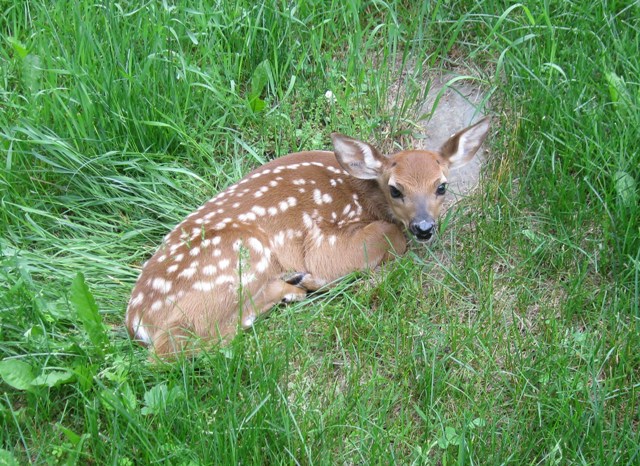
Pennsylvania's fawns have more protection than elderly and disabled citizens: photo by Rich Hill

Half an hour later, while the Browns huddled behind a bed waiting for sounds of a patrol car, the dispatcher called back and asked Mr. Brown to check to see if the man was still on the porch. He wasn’t.

The dispatcher, who had been advised of the wife’s disability and husband’s illness, seemed sure of the couple’s safety at this point. She became irritated when Mrs. Brown suggested that not being on the porch didn’t mean he wasn’t out there. For all they knew, he could be under the porch.

Mrs. Brown relayed her conversation with the sister. Mr. Brown was concerned that the suspect or the person he was yelling to might be in one of the couple’s vehicles or other buildings, which weren’t locked.

The dispatcher suggested Mr. Brown take a flashlight and go look. Mrs. Brown wanted to wait for the police. She became alarmed that they might not actually be coming. The dispatcher showed more irritation and impatience when Mrs. Brown asked again if someone had been sent. Her answer of, “I already told you three times,” did little to reassure her.

Mr. Brown braved the night, checking and locking the vehicles. He didn’t feel comfortable venturing beyond the pool of the porch light, however, so the other buildings remained unchecked.

A Previous Police Incident

After the dispatcher hung up, Mrs. Brown called the suspect’s sister again and was told that the suspect had taken off in his late father’s truck. Mrs. Brown relayed this information to the police.

The dispatcher took a description of the truck and suggested that it would probably be best if they talked to the sister. The couple, certain that the police weren’t going to come check anyway acquiesced.

As the call was ending, it occurred to Mrs. Brown that the police didn’t know where the neighbor’s house was. She tried to share that information, but they didn’t need it. The dispatcher stated that they had been there a couple of nights earlier, but wouldn’t give any details.

The Subsequent Accident

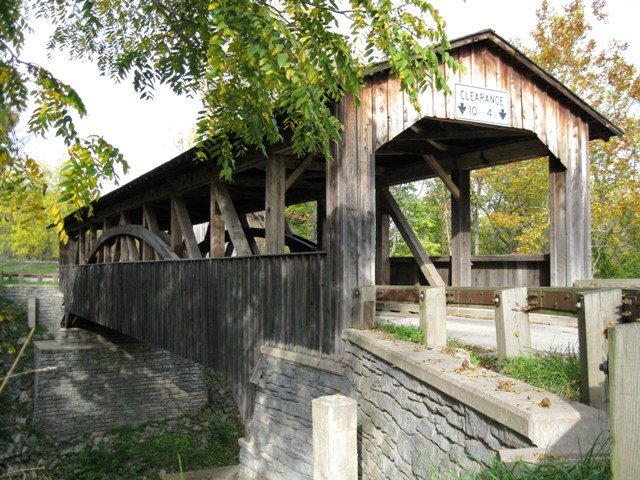
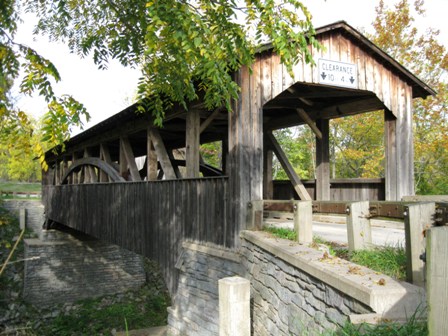
Pennsylvania has many covered bridges & many rural citizens with no real police protection: photo by Rich Hill.

As a courtesy to the suspect’s sister, Mrs. Brown called to tell her that the police wanted to speak with her and were looking for the truck. She learned that she already knew about the previous incident. She didn’t mention it, but she was alarmed that she hadn’t been told this earlier.

Minutes later, the sister’s car drove around the neighborhood, theoretically looking for her brother. The couple never saw a police vehicle.

The next day, the Browns learned via phone from the suspect’s brother that the suspect had crashed the truck into a guard rail about an hour away. Standard alcohol and drug testing was administered at the scene. The suspect refused medical care. DUI charges may be filed.

The Gun

The suspect’s brother also confirmed that guns were kept in the house but insisted that the suspect was really a good person. The couple took no comfort from this.

The guns were locked up in a gun safe, but everyone in the family knew where the key was. The Browns requested that, for everyone’s safety, they be removed from the home.

When he was sure that the sister had driven the suspect from the area, the brother revealed the location of the safe key to Mr. Brown, who already had access to the house key. He authorized Mr. Brown to remove the guns to a secure location.

Mr. Brown found the gun safe unlocked with the key in the door. An antique military rifle was outside of the safe along with ammunition.

“It’s just the kind of gun you would choose, if you wanted to shoot a bear – real or imaginary,” Mr. Brown states.

In the Light of Day

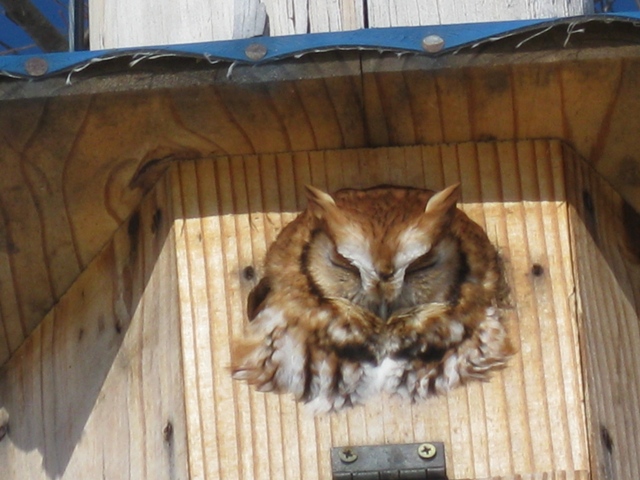
You don't have to be a wise old screech owl to know that Pennsylvania's rural residents deserve better police protection than this: photo by Rich Hill.

Later that day, Mr. Brown realized that the suspect had knocked over and broken items in the back yard. From their dealings with the police and the suspect’s family, the couple felt that everyone thought they were over-reacting and that they, not the suspect, were the problem.

Over the next few days, the Browns had trouble sleeping and were unable to stop thinking about the event. If the sister thought her brother was having a drug interaction to prescription meds, as she claimed, why didn’t she call the neighbors or 911 for an ambulance when she found him incoherent? Why didn’t the police want to come and look around for evidence of damage or a second person? What should the couple have done? Were they really the only people who would get upset about an incident like this? Is this all rural Pennsylvanians can expect from their taxes?

“I keep thinking that there’s some truth in what Obama said about red-neck Pennsylvanians clinging to their Bibles and guns,” Mr. Brown states, “That’s apparently all we really have out here.”

A New Year’s Day Surprise

Imagine playing with your service dog & finding the butcher knife that the Pennsylvania State Police were too unconcerned to come look for: photo by Rich Hill.

On New Year’s Day, the couple took Mrs. Brown’s elderly service dog out to play fetch – something they hadn’t done since the incident. The coating of snow that had recently fallen had disappeared. In the yard beyond the driveway lay a large butcher knife – undoubtedly, this would be of no interest to the police.

Author’s Note

I would like to thank this couple for allowing me to share their story. It offers a perspective on both police protection and disability that isn’t given much press. I have verified the accuracy of the information, and I have tried to exclude any identifying details that would further victimize them.

Posted in Disability, older adults, Pennsylvania, Police, Rural Life, Service Dogs, Uncategorized | Tagged , , , , , , , , , | 2 Comments

Symbolism of the Locks on the Erie Canal & an Author’s Dog Fighting IBD

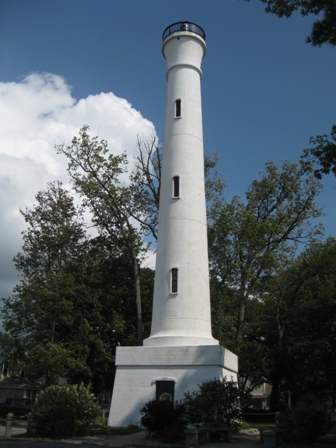
Verona Beach Light, one of 3 working lighthouses on NY's Oneida Lake: photo by Rich Hill

Do you take comfort in certain manmade structures? Two of my top three – lighthouses and covered bridges – have virtually universal appeal. Lighthouses are beacons of hope, turning unforeseen disasters into visible rock formations, skirted with a flick of the helmsman’s wrist. Covered bridges, with their rustic beauty, promise shelter from the storms and safe passage over the rapids for the weary traveler. But, locks? What’s up with that?

covered bridge at luthers mill west of towanda, PA in fall: photo  by rich hill

Canals: an Overview

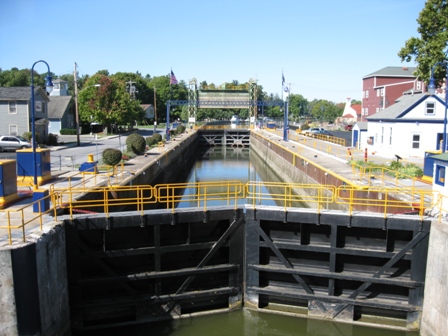
Lock 24 on the Erie Canal in Baldwinsville, NY, mid September: photo by Rich Hill

Ever since first grade when Mrs. Myers told us about the Erie Canal, I have been fascinated. So, what’s so special about manmade waterways? After all, Nature does waterways with a flair for beauty and detail that eludes mere mortals. But, if you look more closely, the reasons behind these structures and how they work might just capture your imagination, as they have mine.

Streams and rivers are wonderful ways to transport people and their belongings … that is, if you don’t mind carrying your boat and supplies every time you encounter rapids, waterfalls, marshes and dry land. In the case of the Panama Canal, oceans work, but who wants to travel all the way around South America? If you want to take advantage of shipping via water, which is still the cheapest option, Nature’s best just doesn’t quite cut it. Canals provide an efficient remedy.

The Erie Canal opened in 1825, and has undergone many expansions and enlargements since. The concept, however, has remained the same. Instead of trying to navigate moving water that twists and turns and gradually and often not so gradually descends or ascends, canals are straight and level.

Moving to higher or lower elevations is accomplished by raising or lowering the level of a section of the canal until it reaches the level of the next leg of the journey. This is not quite as simple as filling and draining a bathtub. From the Hudson River to Rome, New York represented a change in elevation of 420 ft. The canal then descended 363 ft. and rose again to 565.5 ft. at Lake Erie. This was accomplished with a series of engineering masterpieces called locks.

Locks: What they are & How They Work

A lock is a two-part gate across the water, a temporary dam that can be removed and put in place as the situation requires. Leonardo da Vinci’s invention of the miter lock is still widely used today. Closed, its two halves with their 45 degree angles form a ‘V with the point facing into the current. From a little shack, the lock operator controls the locks and the valves that allow water to flow in and out. Rack and pinyon gears, nowadays powered by electric motors, open and close the locks.

The thing about using locks is that you stop traveling via your own power when you enter them. In fact, when “locking through,” your boat gets tied up with bow and stern close to the side walls. In short, you give up control and abide by the rules of the locks. Revving your engines and blowing your horn won’t help you get there any quicker. Your progress depends on someone else and something else.

Symbolism of Locks in This Writer’s Life

There have been many times when I have felt like I have entered a lock; on a gurney headed for surgery, after sending out college applications or job resumes, witnessing a loved one dealing with medical issues or the final transition from flesh to whatever lies beyond, there’s a point when the best I can do is no longer the major factor influencing the ultimate outcome. That’s when I say that I’m in the locks.

The actions of other people matter very much to all of our lives, and we are all more interdependent than we often care to acknowledge. So, to some extent we’re always in the locks. But, some situations make this crystal clear.

Guide Dogs: the Transition

Donna & her guide dog Hunter walk along path in Redwoods. There's a glowing mist: Photo by Rich Hill.

The transition from one guide dog to another, which I have already experienced three times, is definitely a lock experience. The illness of the dearest of friends, the unrelenting need for the independence that friend provides and the life interlude that is the training process with a new helper combine to create major life alterations. I’ve been blessed to have had an overwhelming amount of grace in the past, which enabled me to care for my canine friends in their final days without losing track of how special the experience is.

Our sweet Hunter is 11.5 years old, and his age alone is enough to remind me that our time together is growing short. Added to that, he has been ill this fall, and has lost a scary amount of weight and muscle mass. So far, we’ve spent over $5,000 on veterinary specialists, tests including ultrasound, endoscopy and biopsies and a host of medications and specialty foods.

Canine IBD

Black Lab Hunter on pond-berm trail w blooming birdsfoot trefoil showing his gray summer 2013: photo  by rich hill

Hunter has been diagnosed with inflammatory bowel disease (IBD), not to be confused with Irritable Bowel Syndrome. IBD is an autoimmune disorder, the causes of which are not yet clearly understood. The type Hunter has, Canine Lymphocytic-Plasmacytic Gastroenteritis, occurs when lymph and plasma cells make their way into the lining of the stomach and small intestine. The resulting inflammation makes it difficult for nutrients to be absorbed – hence, the weight loss.

It isn’t fatal, if it is managed. So far, however, he has dropped from 67 to 55lbs. He still enjoys playing a bit with his ball, romping in the snow and going for rides in the car. Eating, however, is problematic. This is a Labrador retriever, so that’s about as abnormal as it gets. Appetite stimulants and hand-feeding are helping, but progress, if there is to be any, is proving to be painfully slow.

IBD is a chronic disease; i.e. it’s not curable. It’s possible that he will recover or at least reach a new normal that will allow him to regain some measure of strength and health. It is also possible that despite our efforts and those of the caring veterinary professionals who have been working with him, that we’ve missed something. Only time will tell.

The View Beyond the Bow

Unlike the locks we love on the Erie Canal, we don’t understand this life transition enough to be certain which way we are headed. We’re securely tied to the canal, waiting for word from the lock operator about how to proceed. Is the water rising or falling? Will the next phase of the journey be open waters or yet another lock? Whatever the final outcome, we will be diligent and listen for the lock operator’s promptings.

Resources: Canals & Locks

The Erie Canal: Making it Work

http://www.eriecanal.org/UnionCollege/Making_It_Work-add.html#add

The Erie Canal: the Lock

http://www.eriecanal.org/UnionCollege/The_Lock.html

New York State Canal System: How to “Lock Through”

http://www.canals.ny.gov/navinfo/index.html#lockthru

Tips for Locking Through

http://www.eriecanalway.org/explore_things-to-do_boating_lock-tips.htm

Things to Do on the Erie Canal

http://www.eriecanalway.org/explore_things-to-do_locks.htm

Leonardo da Vinci’s Canal Lock

http://www.leonardodavincisinventions.com/civil-engineering-inventions/leonardo-da-vincis-canal-lock/

Resources: Inflammatory Bowel Disease in Dogs

Inflammatory Bowel Disease Due to Lymphocytes and Plasma in Dogs – PetMD

http://www.petmd.com/dog/conditions/digestive/c_dg_gastroenteritis_lymphocytic_plasmacytic

Canine Inflammatory Bowel Disease IBD – Chronic Diarrhea and Vomiting in Your Dog by Ron Hines DVM

http://www.2ndchance.info/inflambowel.htm

Inflammatory Bowel Disease May Threaten Your Pet’s Well-Being by Dr. Karen Becker

http://healthypets.mercola.com/sites/healthypets/archive/2010/11/02/inflammatory-bowel-disease-in-pets.aspx

Diets for Pets with Gastrointestinal Disease from PetMeds (r)

http://www.1800petmeds.com/education/diets-pets-gastrointestinal-disease-30.htm

The Best Food For Dogs With A Sensitive Stomach from Dogs By Nina

http://www.dogsbynina.com/best-cheap-dog-food/the-best-food-for-dogs-with-a-sensitive-stomach/

Posted in authors, Blindness, Cats & Dogs, Dogs, Guide dogs, Service Dogs, Visually Impaired, Wrighting | Tagged , , , , , , , , , , , , | 4 Comments

Is Literacy Really for Everyone? – the Numbers Tell a Different Story 

“They’re right! It is nice to snuggle up with a good book.” – photo by Rich Hill

Which minority has the greatest disparity between literacy, unemployment and income on the one hand and intellect, talent and willingness to work on the other? Why are a few of its members medical doctors, engineers, scientists and lawyers, while most have never had a fulltime job? The answer is otherwise able-bodied working-age blind Americans.

When I started developing my Libraries and Literacy page for this site, my intent was to thank some of the libraries who carry The Heart of Applebutter Hill. I collected photos from my library visits and quotes about literacy from famous people. As I proceeded, I realized that I couldn’t help looking into the disparity between the situation of blind Americans and that of the general population and how literacy and the availability of books in accessible formats impact that disparity. This post is based on my research. You will find links to sources cited in this article under the References heading at the end.

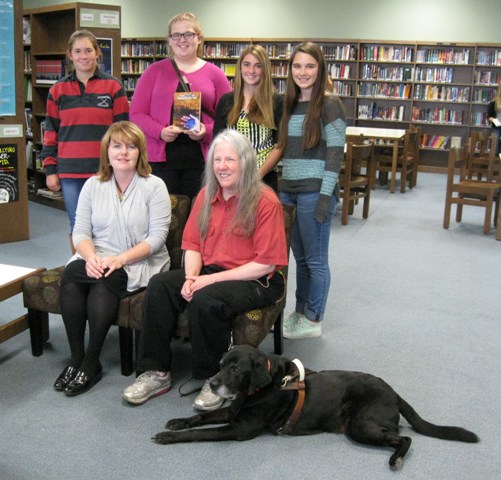
lackawanna trail high library (Factoryville, PA): Donna W. Hill on sofa w librarian kelly hopkins; 4 students (l-r: Taylor Selwood,Jordan Flynn, Ally Decker and Annika Kongvold ) stand behind. Jordan holds Donna's novel The Heart of Applebutter Hill & Donna's black Lab guide dog, Hunter, watches from the floor: photo by rich hill.

Lackawanna Trail High School (Factoryville, PA) – Librarian Kelly Hopkins and Donna on sofa; standing behind (l-r: Taylor Selwood, Jordan Flynn, Ally Decker and Annika Kongvold. Jordan holds The Heart of Applebutter Hill and Donna’s guide dog, Hunter, watches from the floor: photo by Rich Hill.

Literacy: What it is & What it Is Not

A Screech Owl Looks Out from  a House Built for Wood-Ducks. Photo by Rich Hill.

You Put up a Wood-Duck House, and what Do You Get? Sometimes …Screech Owls: photo by Rich Hill.

To understand what is happening to blind Americans, it is important to know what literacy is. It is commonly defined as the ability to read and write – a definition that raises more questions than it answers. What is reading? What is writing? To hone in on the essence of literacy, however, we need only look to its Middle English roots, which – according to Merriam-Webster – mean “marked with letters.” Literacy is an understanding of and fluency in language based on its primary building blocks – letters, punctuation and sentence structure.

The parents of a sighted child would be justifiably horrified and outraged if their child was denied education in reading and writing print. “Johnny is a wonderful listener. He doesn’t need print,” just doesn’t fly in the sighted world.

But, for a variety of reasons (most of which boil down to a lack of understanding and low expectations), blind children are routinely steered to audio learning. Recorded books and synthesized speech have their place in a blind person’s toolbox, and they are essential for the vast majority of students with print disabilities – sighted students with learning disabilities such as dyslexia. Nevertheless, Braille is the only alternative giving true literacy on a par with print.

Braille provides immediate access to the same information you see with your eyes. Punctuation, spelling, paragraph markings and other essential components of the written word are apparent through touch, as Braille is read just like they are through sight for print readers. Braille, which is now available in downloadable digital formats for high-tech refreshable Braille reading devices, is also the only option for people who are deaf and blind.

Here are a few numbers that demonstrate how literacy and access to books impact blind people.

Income and Poverty: Blind Americans are Twice as Likely to Live in Poverty

In 2012, the median Annual Household Income of non-institutionalized blind Americans (aged 21-64) was $33,400. 31.2% were living below the poverty line (National Federation of the Blind – NFB).

According to a CNN report on Census statistics for 2012, median household income for the American population as a whole was $51,017, and 15% were living in poverty.

The lost productivity in the US due to blindness and eye diseases is estimated to be $8.0 billion per year (National Braille Press – NBP).

Literacy: Blind Students are 3 Times More Likely to be Illiterate

A young fawn stands alone in the grass east of our driveway: photo by Rich Hill.

“Doesn’t every kid deserve a chance?” – photo by Rich Hill.

As you read this section, keep in mind that Of the less than 40% of blind American adults who are employed, 90% read Braille (NBP).

60,393 – Total number of blind American students in US – from the 2014 American Printing House for the Blind poll of states for data on the number of legally blind children (through age 21) enrolled in elementary and high school (NFB).

5,147 (8.5%) – number of students for whom Braille is their primary way to read (NFB).

12 – Percentage of blind American students taught to read Braille; i.e. only 12% are even being given the chance to become truly literate (NBP).

Using the same standards applied to sighted students, no fewer than 88% of blind students are illiterate. In contrast, according to DoSomething.org, only 25% (one in four) American children grow up without being taught to read.

Books: What’s Available for Print Readers & What’s Accessible for Those with Print Disabilities

36 million – the approximate number of books and other print materials in the collection of the Library of Congress (according to LOC.gov) with 12,000 added daily.

300,000 – approximate number of titles available from Bookshare, the world’s largest accessible online library for people with print disabilities. Bookshare provides their collection in several downloadable formats, including DAISY text, synthetic speech and refreshable Braille.

80,000 – approximate number of titles available from Learning Ally – formerly Recording for the Blind & Dyslexic – the world’s largest library of human-narrated audiobooks, as of October 30, 2014 (according to a Learning Ally customer representative)

80,000 – books in audio format available through the National Library Service for the Blind & Physically Handicapped, a division of the Library of Congress (according to a November 3, 2014 email from NLS’s research department). This doesn’t include books in an older rigid disc format that seldom circulates anymore.

31,338 – books available in braille from NLS.

Note: NLS also has a Braille music collection of 22,775 titles, 4,892 audio recordings and 662 scores in large print. NLS provides professionally recorded books as downloads, on digital cartridge and (until the entire collection is digitized) cassette tape. Some books are available in hard copy and downloadable Braille and in large print. NLS chooses books based on the New York Times Bestsellers list and books with significant national press coverage. Regional NLS libraries record some titles with local interest. Borrowing from the NLS is free to all Americans with print disabilities.

According to the World Blind Union (WBU), over 90% of published books cannot be read by people who are blind or have other print disabilities. The World Health Organization (WHO) estimates that 39 million people worldwide, including 1.4 million children under 15, are irreversibly blind. This does not take into account the visually impaired and learning disabled populations for whom reading print is not possible. Only 320,000 people with visual impairments and other print disabilities in approximately 50 countries have access to Bookshare‘s collection.

Easy Ways to End Book Famine for People with Print Disabilities

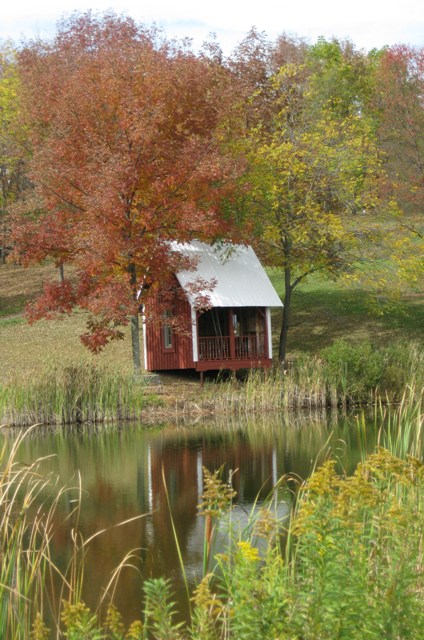
Hills' gingerbread pond shelter flanked by trees in autumn colors: photo by Rich Hill.

Hills’ gingerbread pond shelter flanked by trees in autumn colors: photo by Rich Hill.

Send an email, make a phone call or write a letter to Support the Marrakesh Treaty

The Marrakesh Treaty is an effort to update international copyright laws pertaining to reading materials in accessible formats. Urge your national representatives and senators to ratify the Marrakesh Treaty which will facilitate access to published works for people with Print disabilities.

A project of WBU and the World Intellectual Property Organization (WIPO), it was Signed by 72 nations including the US in 2013. But, a “signed” treaty is just a piece of paper. It needs to be “ratified” by twenty nations to become international law. So far, only India and El Salvador have ratified it. (WBU & WIPO)

Spread the Word with The Heart of Applebutter Hill

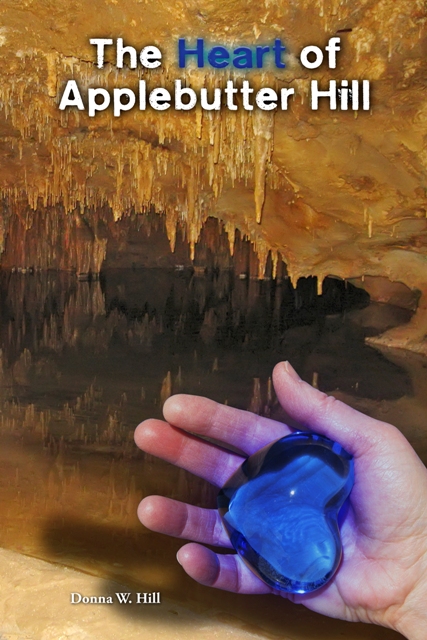
Book cover for The Heart of Applebutter Hill by Donna W. Hill shows a cave scene - stalactites reflected in an underground lake, while a hand holds the Heartstone of Arden-Goth: photos, Rich Hill;, design, Lizza Studios.

Book cover for The Heart of Applebutter Hill by Donna W. Hill shows a cave scene – stalactites reflected in an underground lake, while a hand holds the Heartstone of Arden-Goth: photos, Rich Hill;, design, Lizza Studios.

Please purchase the educator-recommended novel The Heart of Applebutter Hill, which features a 14-year-old blind heroine, for your local public and school libraries and as gifts. Doing so will help in several ways.

  1. It will raise awareness about the capabilities of blind people, the challenges we face and the common humanity we all share.
  2. If we sell enough copies to garner some significant national press coverage, NLS will include it in their collection.
  3. If not, every dime I receive from sales is going to a fund to have it Brailled and distributed to blind students to encourage Braille literacy.

The Heart of Applebutter Hill is available in print and Kindle from Amazon: http://www.amazon.com/books/dp/1483948226

Or, through most online e-Book outlets, including:
Nook Book: http://www.barnesandnoble.com/w/the-heart-of-applebutter-hill-donna-w-hill/1115426305?ean=2940016415000&itm=1&usri=2940016415000

Apple iTunes: https://itunes.apple.com/us/book/the-heart-of-applebutter-hill/id651693834?mt=11

Smashwords (7 formats including .epub, .rtf, .mobi & .pdf): http://www.smashwords.com/books/view/313071?ref=DonnaWHill

Readers with Print Disabilities can find The Heart of Applebutter Hill on Bookshare: http://www.bookshare.org/browse/book/639304

Join the DAISY Planet

Follow what’s going on worldwide in the struggle for accessible books by visiting the DAISY Consortium. The DAISY (Digitally Accessible Information SYstems) Consortium is a global group of organizations working towards creating the best way to read and publish. Read their awesome newsletter, The Daisy Planet: http://DAISY.org

References

National Braille Press: http://www.nbp.org/ic/nbp/braille/needforbraille.html

National Federation of the Blind: Blindness Statistics: https://nfb.org/blindness-statistics

CNN on 2012 Income & Poverty Statistics: http://money.cnn.com/2013/09/17/news/economy/poverty-income/

11 Facts about Literacy in America | DoSomething.org: https://www.dosomething.org/facts/11-facts-about-literacy-america

Library of Congress: http://www.loc.gov/about/fascinating-facts/

Bookshare: https://www.bookshare.org/cms/about

Learning Ally: http://LearningAlly.org

National Library Service for the Blind & Physically Handicapped: http://www.loc.gov/nls

World Blind Union: http://www.worldblindunion.org/English/our-work/our-priorities/Pages/right-2-read-campaign.aspx

World Health Organization: http://www.who.int/mediacentre/factsheets/fs282/en/

WIPO – Marrakesh Treaty to Facilitate Access to Published Works for Persons Who Are Blind, Visually Impaired, or Otherwise Print Disabled: http://www.wipo.int/wipolex/en/wipo_treaties/text.jsp?file_id=301016

Posted in Accessibility, Blindness, Braille, Disability, Education, Libraries, Literacy, Print Disabilities, Visually Impaired | Tagged , , , , , , , , , , | 2 Comments

Under the Persimmon Tree by Suzanne Fisher Staples: a Book Review

Under the Persimmon TreeUnder the Persimmon Tree by Suzanne Fisher Staples
My rating: 5 of 5 stars

Afghanistan is a land of war and poverty in which there are rarely any happy endings. How can you tell its story with honesty, sensitivity and realism without leaving the reader depressed, angry or apathetic? Suzanne Fisher Staples, who worked in the region as a journalist, has found a way.

This exquisitely beautiful book changed me in ways I am having a hard time nailing down. Yes, I learned far more than I knew about this ancient culture, but that is only a part of it. I know what it didn’t do. it didn’t leave me more grateful that I am not living in a war-torn, impoverished nation, and it hasn’t made me re-think my political or religious preferences. The change has been a quickening — an awakening that transcends specifics.

I struggled to find a word that would describe the tone of Staples’ prose. Poetic seems too bland; spiritual too religious. Somehow in the telling of the story, in shedding light upon the daily lives of the Afghan people, which are as rich with tenderness and a connection to the best of community, the land and the stars as they are poor in the eyes of the West, she elevates the reader in ways that are hopefully permanent and leaves me marveling again that the best books for all of us are often marketed to the young.

Structurally, the book is a convergence of two paths, separated by time and culture. Staples preserves this separation through the use of two points of view. Najmah, the young Afghan girl, tells her story in the first person. Nusrat, an American-Muslim who runs the Persimmon Tree School for Afghan refugees in Peshawar, Pakistan, enters our hearts through the third person account of the world that Najmah seeks to enter.

The girl and the woman are both running away from and through anguish, dependent upon their own resourcefulness and the kindness of strangers. They are also looking to the stars for guidance.

The book opens with Najmah’s account of her daily life in the mountains with her brother, Nur, who torments her with stories about non-existent leopards, her gentle father (Baba-jan), who teaches them about the stars, and her pregnant mother (Mada-jan). Their farm — with its fruit and nut trees, sheep and goats and the garden where her father grows crops for the market and flowers for his wife — meets their needs despite the drought.

With her mother so close to giving birth, young Najmah, whose name means Star, is called upon to step up in ways that both frighten her and make her proud. Wrapping firewood in her shawl and leading the animals into the mountains to find grass allow her to learn to function despite her fears.

But, Afghanistan has been at war since Baba-jan was a boy, and Najmah has heard too much not to be afraid.

“The Taliban have said the only thing people can do to enjoy themselves is to walk in the garden and smell the flowers. But ever since the Taliban came to power five years ago, there has been drought. It’s as if Allah has banished flowers to punish the
Taliban for the evil things they do to people.”

After the Taliban take Baba-jan and Nur, Najmah cares for the farm and her mother. When her mother and baby brother die in the bombing, her skills are put to the test. She is forced to disguise herself as a boy and run for her life.

Nusrat, whose name means Help, grew up as “Elaine” in Watertown, New York. At ten, her beloved younger sister died. The loss sent her life into a tail-spin and caused her to question her faith and look to mathematics and science for answers. She falls in love with a Muslim doctor in New York City and is drawn to the Koran. She feels a special kinship with Islam, the cradle of mathematics and astronomy.

Six months prior to 9/11, when Faiz leaves for Afghanistan to set up a clinic in the north, she has the choice of remaining in New York or living with her husband’s family in a wealthy neighborhood of Peshawar. Instead, she starts the Persimmon Tree School for refugee children. She teaches shepherd children the poetry of numbers and feeds their families while waiting for the return of her husband.

Under the Persimmon Tree is not a quest for the age-old static “Riding off into the sunset” ending with its snapshot beauty. It is a portrayal of the enduring and triumphant nature of goodness, carried aloft down paths that are often uncharted and treacherous by people who have chosen to do what is right because it is right.

It is a call not to smell the roses but to ponder the stars. Najmah’s Baba-jan taught her to make a fist and to point the second knuckle at the star that never moves — al-Qutb (the hub), which we know as Polaris, the North Star, the one constant in the skies. In knowing the stars, we will never be lost, and — whether as guides in the physical world or through the wanderings of our hearts, they will always help us find our way home.

View all my reviews

Some House-keeping & New Pages about Readers with Print Disabilities &Breast Cancer Awareness

Hills' gingerbread pond shelter flanked by trees in autumn colors: photo by Rich Hill

My bad. I acknowledged the winners of this past summer’s print give-away on Facebook, but not here where it all began. If you’re just learning about this, we were trying to raise awareness about the need for accessible books for students with print disabilities.

Thanks to everyone who read The Heart of Applebutter Hill and wrote customer reviews on Amazon. I appreciate them all, including the less-than-flattering ones — even if I had to work a little harder with those.

We more than met our original goal of twenty-five reviews with an average rating of 4.2, so we decided to give away three print copies. The winners are Marie Brophy (New York), Joe Drenth (Pennsylvania) and Ann Marie Medlar (Florida). The books were sent, and I received acknowledgments that they arrived safe and sound via snail-mail.

Readers with Print Disabilities: Quick Facts & Resources

Readers with Print Disabilities: Quick Facts & Resources

Breast Cancer Awareness: Survivor Stories, Tips & Info

Breast Cancer Awareness: Survivor Stories, Tips & Info


Posted in Afghanistan, authors, Book Reviews, novel, Uncategorized, Wrighting, young adult | Tagged , , , , , , , | Leave a comment